
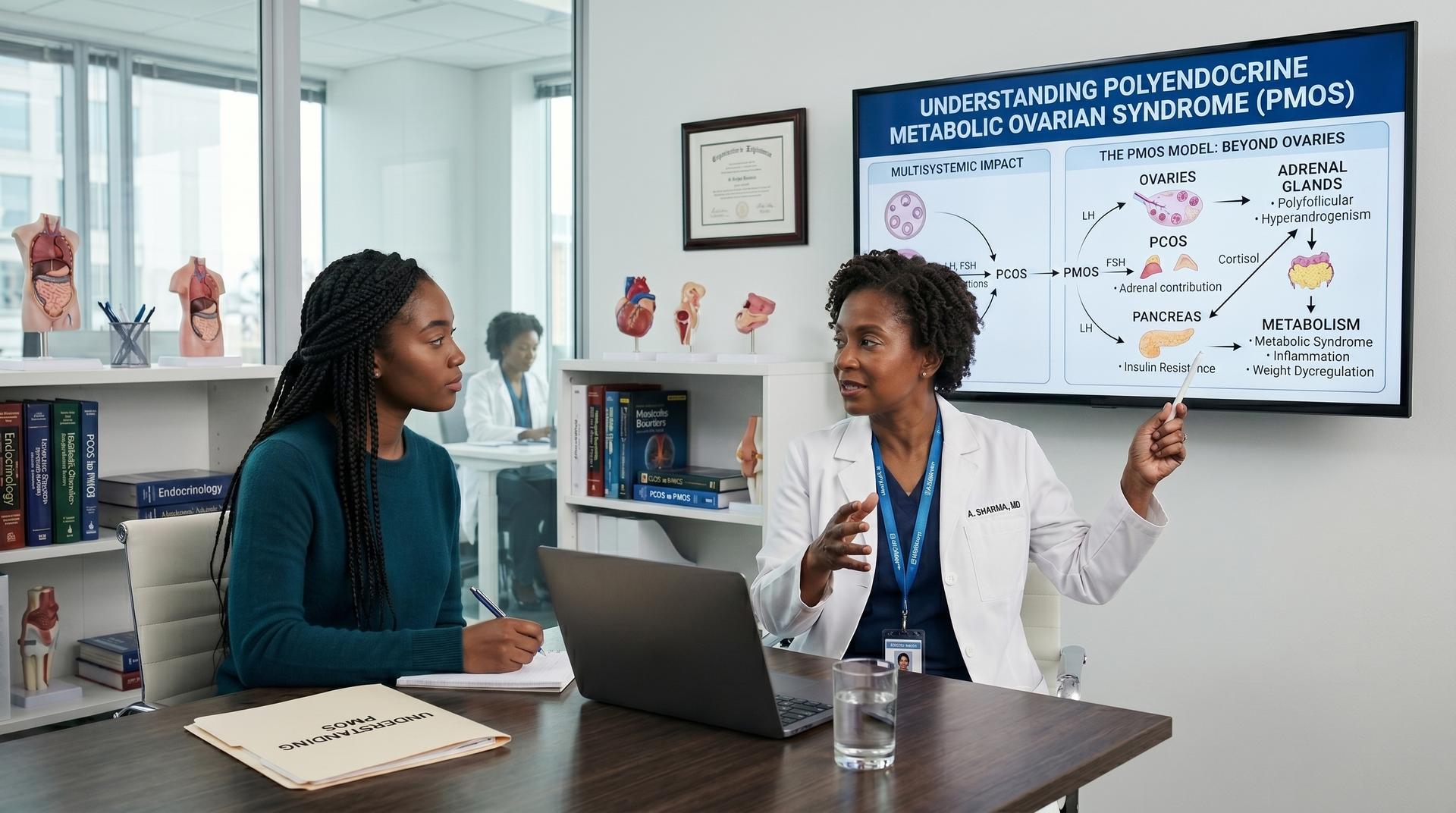
Hormones influence far more than just the menstrual cycle. They affect energy levels, metabolism, mood, fertility, skin health, body weight, sleep, and overall wellbeing. One condition that silently disrupts many of these systems at the same time is Polycystic Ovary Syndrome (PCOS), which, as of May 2026, is known as Polyendocrine Metabolic Ovarian Syndrome (PMOS).
This newer term reflects a growing understanding that the condition is not only related to the ovaries, but also affects the body’s hormonal and metabolic systems in significant ways. Despite being one of the most common hormonal disorders affecting women of reproductive age, many women still remain undiagnosed for years.
1. PMOS Is More Than Just An Ovarian Condition
For a long time, PCOS was mainly associated with ovarian cysts and fertility problems. However, research now shows that the condition is much broader and more complex than previously believed.
Many women with PMOS experience irregular periods, unexplained weight gain, acne, excessive facial hair, difficulty conceiving, fatigue, anxiety, insulin resistance, and challenges with blood sugar control. Some women may have severe symptoms, while others may only notice subtle hormonal changes.
In many cases, the condition affects self-esteem, emotional health, and quality of life long before a diagnosis is made.
PMOS affects far more than fertility alone.
2. What Causes PMOS?
PMOS develops due to a combination of hormonal imbalance, metabolic dysfunction, genetic predisposition, and insulin resistance.
Insulin is the hormone responsible for helping the body regulate blood sugar levels. In many women with PMOS, the body becomes resistant to insulin, causing the pancreas to produce higher amounts of it.
Elevated insulin levels can stimulate the ovaries to produce excess androgens, which are hormones typically present in smaller amounts in women. These hormonal disruptions interfere with ovulation and contribute to many of the symptoms associated with the condition.
3. Common Symptoms Women May Notice
One of the most common symptoms of PMOS is irregular menstrual cycles. Some women may go for several months without a period, while others experience unpredictable or unusually heavy bleeding.
Because ovulation may not occur regularly, many women also face fertility challenges or difficulty becoming pregnant.
However, reproductive symptoms are only one part of the condition.
- Persistent acne
- Oily skin
- Thinning scalp hair
- Increased hair growth on the face, chest, abdomen, or back
- Darkened skin patches around the neck, underarms, or groin
These changes are often linked to elevated androgen levels and underlying insulin resistance.
4. Weight Gain, Fatigue, and Mental Health Challenges
Weight gain, particularly around the abdomen, is another common feature of PMOS. Many women find it difficult to lose weight despite exercising or dieting consistently.
Fatigue and low energy levels are also frequently reported and may result from hormonal fluctuations, poor sleep quality, or metabolic dysfunction.
In addition, PMOS has increasingly been linked to mental health challenges such as anxiety, depression, emotional distress, and reduced self-confidence, especially among women who struggle with visible symptoms like acne, infertility, or unwanted hair growth.
5. Why The Name Changed From PCOS To PMOS
The use of the term Polyendocrine Metabolic Ovarian Syndrome highlights the fact that the condition extends far beyond the ovaries alone.
- “Polyendocrine” refers to the involvement of multiple hormonal systems
- “Metabolic” reflects the strong association with insulin resistance, obesity, and long-term metabolic complications
It is believed that the traditional name, PCOS, does not fully capture the complexity of the condition because not all women develop ovarian cysts, and many symptoms arise from hormonal and metabolic disturbances rather than ovarian abnormalities themselves.
Not every woman with PMOS will have ovarian cysts.
6. Long-Term Health Risks Associated With PMOS
If left unmanaged, PMOS may increase the risk of several long-term health complications.
- Type 2 diabetes
- High blood pressure
- Elevated cholesterol levels
- Cardiovascular disease
- Sleep apnoea
Infrequent menstrual cycles may also increase the risk of abnormal thickening of the uterine lining, which can lead to further gynaecological complications over time.
These long-term risks make early diagnosis and proper management extremely important.
7. How PMOS Is Diagnosed
Diagnosis of PMOS usually involves a combination of medical history, symptom evaluation, physical examination, blood tests, and ultrasound imaging.
Doctors often assess hormone levels, blood sugar control, insulin function, and cholesterol levels while also evaluating menstrual patterns and physical symptoms.
Ultrasound scans may reveal enlarged ovaries or multiple immature follicles, although not every woman with PMOS will have visible cysts.
8. Managing PMOS
Although there is currently no single cure for PMOS, the condition can often be managed effectively through a combination of lifestyle changes, medical treatment, and long-term monitoring.
- Balanced nutrition
- Fibre-rich foods
- Lean proteins
- Reduced intake of highly processed foods
- Regular physical activity
These measures may help improve insulin sensitivity, hormonal balance, metabolism, weight management, and cardiovascular health.
In some cases, doctors may prescribe medications to regulate menstrual cycles, improve insulin sensitivity, support ovulation, or manage symptoms such as acne and excessive hair growth.
Fertility treatments may also help women who are trying to conceive.
Importantly, emotional and psychological support should not be overlooked, as many women with PMOS experience frustration, stress, or emotional exhaustion from living with a chronic hormonal condition.
9. Why Early Support Matters
Despite the challenges associated with PMOS, many women are able to live healthy and fulfilling lives with proper support and medical care.
Early recognition of symptoms, timely medical evaluation, and consistent lifestyle management can significantly improve long-term outcomes.
Increased awareness of PMOS is helping both healthcare professionals and patients understand that this condition is not simply about fertility or ovarian cysts, but rather a broader hormonal and metabolic disorder that deserves comprehensive care and attention.
If you have been noticing symptoms such as irregular periods, unexplained weight changes, acne, excessive hair growth, or difficulty conceiving, it is worth speaking to a healthcare professional early.
Because sometimes, understanding what your body is trying to tell you is the first step toward better health.
Call To Action
Speak to a qualified clinician privately through Zuri Health and get guidance on hormonal health, menstrual concerns, fertility, and metabolic wellbeing.
- Chat with us on WhatsApp
- Phone Number: +254 756 551 551
- You can also use this WhatsApp link: Click here to chat