

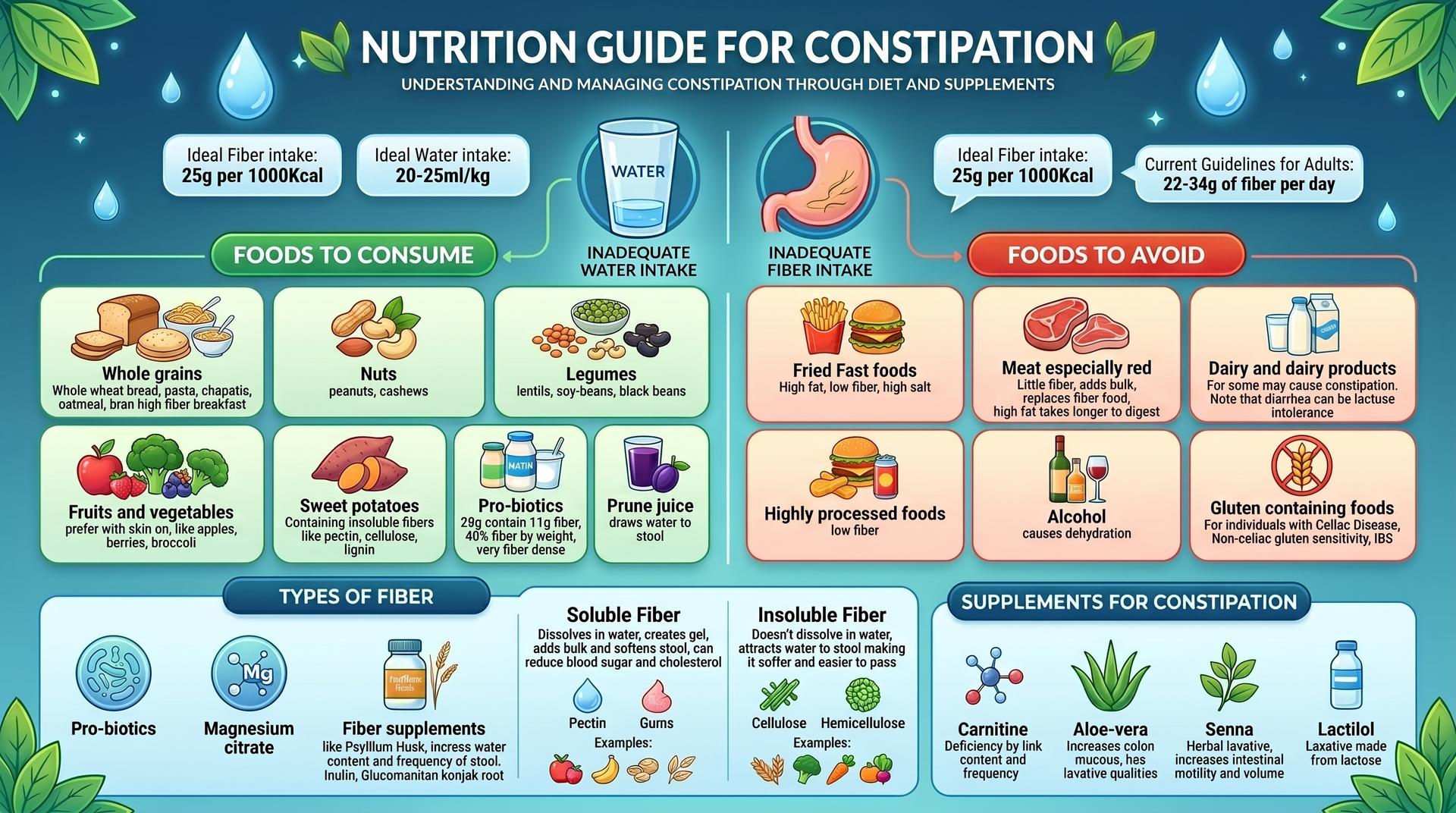
The main culprits when it comes to constipation are:
- Inadequate water intake.
- Inadequate fiber intake.
Ideal Fiber intake should be 25g per 1000Kcal.
Ideal water intake 20-25ml/kg.
Current guidelines state that adults should get between 22-34g of fiber per day.
Foods to Consume
- Whole grains - Whole wheat bread, pasta chapatis/flatbread, oatmeal and bran high fiber breakfast.
- Nuts such as peanuts, cashews and cashews.
- Legumes such as lentils, soy-beans and black beans.
- Fruits and vegetables (Preferably with the skin on for fruits such as apples).
- Sweet potatoes (Contain insoluble fibers such as pectin cellulose and lignin).
- Chia seeds (28g contain 11g fiber). Chia seeds are made up of approximately 40% fiber by weight and are one of the most fiber dense foods available.
- Pro-biotics such as fermented milk and plain yoghurt with probiotics (Kombucha).
- Prune juice - draws water to stool.
Foods to Avoid
- Fried Fast foods are high in fat and low in fiber which may worsen constipation. They also contain high salt which reduces water content in the body.
- Meat especially red - contains little fiber and in turn adds bulk to stool, takes place of fiber rich food in the diet and contains high fat which takes longer to digest therefore worsening constipation.
- Dairy and dairy products (Mainly diarrhoea results in lactose intolerance but for some people it may cause constipation).
- Highly processed foods may worsen constipation due to their low fiber content.
- Alcohol causes dehydration which worsens constipation.
- Gluten-containing foods as they may trigger constipation in individuals with Celiac Disease, Non-celiac gluten sensitivity and also irritable bowel syndrome.
Types of Fiber
Soluble Fiber: Dissolves in water and includes all plant pectin and gums
Mode of action: creates a gel that adds bulk and softens stool. Soluble fiber may also reduce blood sugar and cholesterol.
Insoluble Fiber: doesn’t dissolve in water and includes plant cellulose and hemicellulose.
Mode of action: It attracts water to your stool making it softer and easier to pass.
Supplements for Constipation
- Pro-biotics
- Magnesium citrate
- Fiber supplements such as Psyllium Husk (increases water content of stool and increases stool frequency). Other supplements include Inulin and Glucomannan konjak root.
- Carnitine - carnitine deficiency may be linked to constipation.
- Aloe-vera - increases colon mucous secretion and also has laxative qualities.
- Senna - herbal laxative which increases intestinal motility and increases stool volume.
- Lactilol - laxative made from lactose.
Call To Action
Talk to a qualified clinician privately on Zuri Health and get the clarity you need to improve your digestive health.
- Chat with us on WhatsApp
- Phone Number: +254 756 551 551
- You can also use this WhatsApp link: Click here to chat