

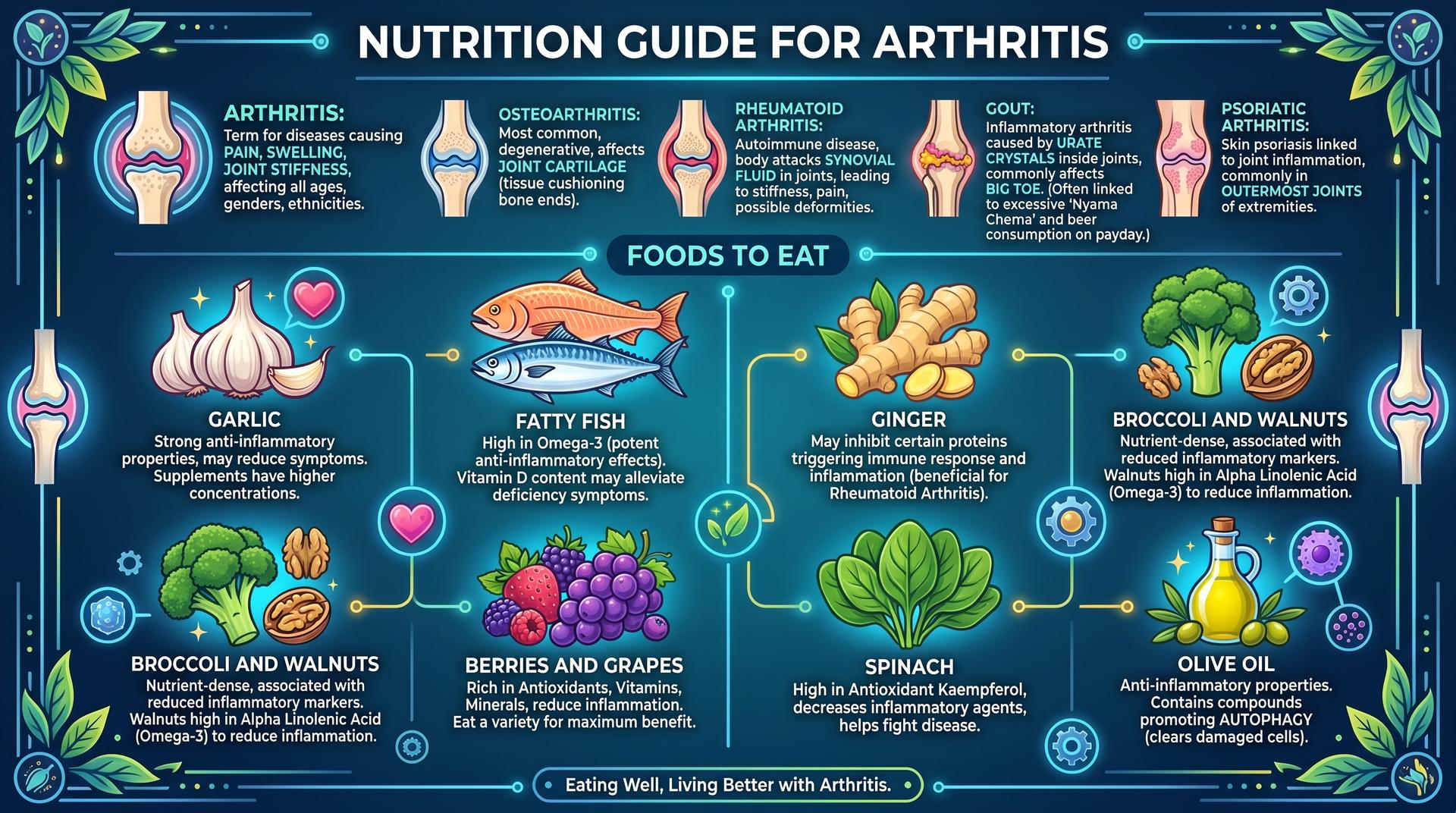
Arthritis is a term for a group of diseases that cause pain swelling and joint stiffness and can affect people of all ages, genders and ethnicities.
1. Osteoarthritis, which is also called degenerative arthritis, is the most common type of arthritis. It primarily affects the joint cartilage, which is the tissue that cushions the ends of bones.
2. Rheumatoid arthritis is an autoimmune disease where the body attacks the synovial fluid in joints leading to stiffness, pain and possible deformities.
3. Gout, a form of inflammatory arthritis caused by accumulation of urate crystals inside joints and commonly affects the big toe.
This may be very common due to the craze of consuming “Nyama choma” and beer as a away of winding up the week and especially on pay day where some people even eat a whole Kg of meat alone.
4. Psoriatic arthritis where psoriasis of the skin is linked to joint inflammation commonly in the outermost joints of the extremities.
Foods to Eat
Garlic
Garlic has very strong anti-inflammatory properties that may help reduce the symptoms of arthritis. Garlic supplements have the components in higher concentrations and therefore may be more effective.
Fatty Fish
Fatty fish varieties are high in omega-3, which has very potent anti-inflammatory effects. The vitamin D content may also help alleviate some of the symptoms caused by vitamin D deficiency in arthritis patients.
Ginger
Ginger has may inhibit certain proteins that may trigger the immune system to react and cause inflammation as in the case of rheumatoid arthritis and therefore may be beneficial.
Broccoli and Walnuts
Eating both of these nutrient dense foods may be associated with reduced markers of inflammation. Walnuts are high in an omega-3 acid (alpha linolenic acid), which has been shown to reduce inflammation and ease symptoms of arthritis.
Berries and Grapes
Due to their richness in antioxidants vitamins and minerals the play a role in reducing inflammation. Eat a variety of berries to reap maximum benefit from the range of nutrients.
Spinach
Spinach is high in the antioxidant kaempferol, which decreases the effects of inflammatory agents, and also helps fight disease.
Olive Oil
Apart from its anti-inflammatory properties, olive oil research suggests that it may contain compounds that promote autophagy (a process that helps clear out damaged cells from the body), which may be beneficial.
Call To Action
Talk to a qualified clinician privately and get the clarity you need with Zuri Health.
- Chat with us on WhatsApp
- Phone Number: +254 756 551 551
- You can also use this WhatsApp link: Click here to chat